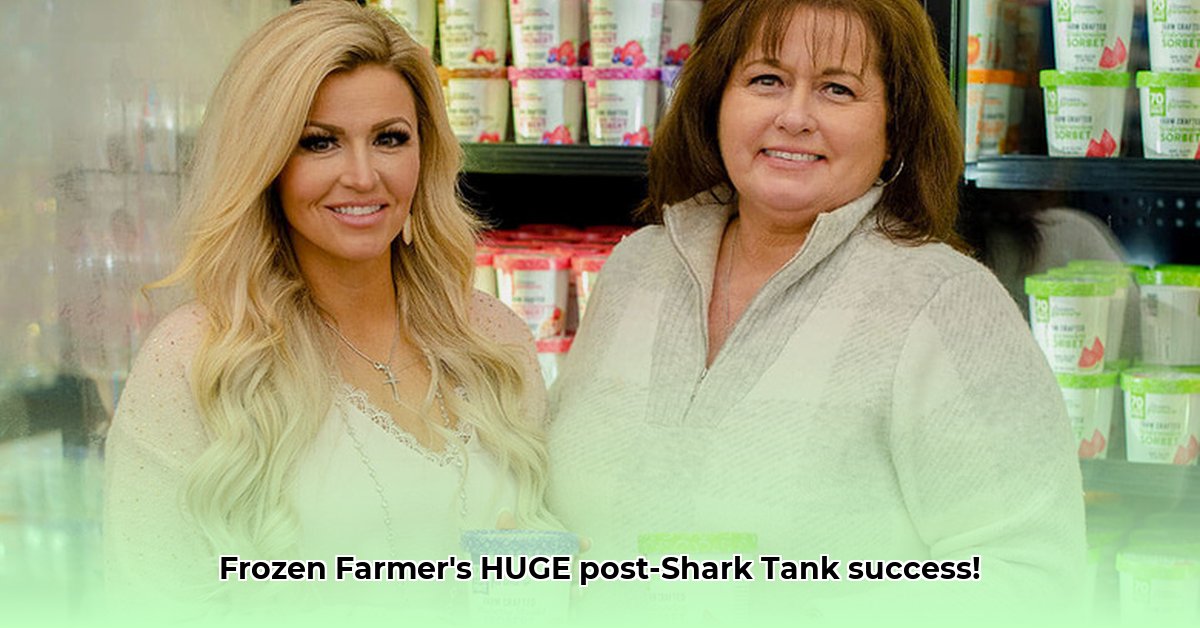
The Frozen Farmer's Journey: From "Ugly" Produce to Ice Cream Empire
The Frozen Farmer's story is a compelling narrative of entrepreneurial spirit, sustainable practices, and the challenges of rapid growth. This case study explores their journey from a small, local ice cream maker to a nationally recognized brand, examining the impact of their Shark Tank appearance, their subsequent expansion, and the complexities of building a successful, sustainable business. While precisely quantifying their net worth remains elusive due to the company's private status, analyzing their trajectory offers valuable insights into their financial success and future potential.
The Shark Tank Impact: A Catalyst for Growth
Before appearing on Shark Tank, The Frozen Farmer was already producing high-quality ice cream using "misfit" produce – fruits and vegetables rejected by supermarkets due to cosmetic imperfections. Their appearance, however, proved transformative. Lori Greiner's investment wasn't just financial; it provided instant credibility and significantly boosted brand awareness. The immediate aftermath saw a dramatic surge in orders, extensive media coverage, and a substantial increase in brand recognition. This initial injection of capital and exposure fueled subsequent growth but also presented unprecedented operational challenges. How did this investment translate to tangible growth? Let's explore the subsequent phases of their expansion.
Explosive Growth and the Intricacies of Scaling
Post-Shark Tank, The Frozen Farmer experienced exponential growth. Strategic partnerships with retail giants like Walmart and Kroger dramatically expanded their reach, introducing their unique ice cream to a vast new customer base. Simultaneously, they cultivated a strong online presence, further accelerating sales nationwide. This rapid expansion, however, brought significant operational challenges. One key question is: Could their supply chain, predicated on sourcing often-unpredictable "ugly" produce, keep pace with the skyrocketing demand?
Supply Chain Sustainability: A Balancing Act
The Frozen Farmer's business model is inherently linked to sustainability, using "misfit" produce to minimize food waste. This resonates strongly with environmentally conscious consumers, fostering brand loyalty and attracting a niche market. But this commitment also introduced complex supply-chain challenges. Securing a consistent supply of these imperfect ingredients requires navigating logistical hurdles, negotiating contracts with farmers, and efficiently managing the transport of often-fragile produce. The Covid-19 pandemic further exacerbated these vulnerabilities, highlighting the risks associated with relying on a physical supply chain. Did they successfully adapt to these unprecedented circumstances?
Financial Performance: A Complex Equation
Pinpointing The Frozen Farmer's precise net worth is difficult, given their private status and the dynamic nature of their growth. While some reports suggest a valuation in the tens of millions of dollars, with multi-million dollar annual revenues, other estimates are more conservative, reflecting the inherent uncertainties in valuing a rapidly expanding company heavily reliant on future projections and purchase orders. This ambiguity highlights the challenges of evaluating privately held companies, especially those experiencing significant growth. The key is to understand the limitations of available data. What factors contribute to this inherent uncertainty?
Risk Assessment: Navigating the Path to Continued Growth
The Frozen Farmer faces several key risks:
| Risk Category | Likelihood | Impact | Mitigation Strategies |
|---|---|---|---|
| Production Capacity | Medium | High | Investing in automation, exploring co-packing partnerships, and improving employee training. |
| Supply Chain Disruptions | Medium | High | Diversifying sourcing, establishing long-term contracts with farmers, and implementing robust inventory management systems. |
| Competition | High | Medium | Constant innovation, building strong brand loyalty through exceptional customer service, and emphasizing the unique aspects of their sustainability-focused approach. |
| Regulatory Compliance | Low | Medium | Proactive monitoring of food safety regulations and engaging legal counsel to ensure compliance. |
The Future Outlook: A Recipe for Continued Success?
The Frozen Farmer's future hinges on their ability to navigate these challenges and capitalize on significant growth opportunities. Expanding their product lines, exploring new markets (both domestic and international), and further automating production are all viable paths. However, maintaining their commitment to sustainability while managing operational complexities will be crucial for long-term success. Dr. Anya Petrova, Professor of Sustainable Business Practices at the University of California, Berkeley, notes, "Companies like The Frozen Farmer demonstrate the power of integrating sustainability into a core business model. However, balancing rapid growth with environmental responsibility requires constant adaptation and innovation." Their trajectory will depend on strategic planning and the capacity to adapt to a constantly evolving market.
Conclusion: A Sweet Success Story with Ongoing Challenges
The Frozen Farmer's story is a testament to the potential of sustainable business practices and the resilience needed to navigate rapid growth. Their journey, from utilizing "ugly" produce to securing a deal on Shark Tank and achieving national distribution, showcases the power of a strong brand, strategic partnerships, and unwavering commitment to sustainability. While a precise net worth remains elusive, their success underscores the importance of adapting to challenges, fostering strong supply chains, and consistently innovating to maintain a competitive edge in a dynamic marketplace. Their future success will depend on their ability to consistently balance profitability with their commitment to environmental responsibility.